Ever wondered what separates a good cook from a truly great one? Often, it’s the precision that comes from using the right tools. In the realm of culinary excellence, the digital measuring scale for your kitchen stands out as an indispensable gadget. This isn’t just another kitchen accessory; it’s a game-changer that promises accuracy, consistency, and a touch of professional flair to your everyday cooking and baking adventures. Forget the guesswork and embrace the exactness that a digital kitchen scale brings to your countertop.
What Exactly is a Digital Measuring Scale for Your Kitchen?
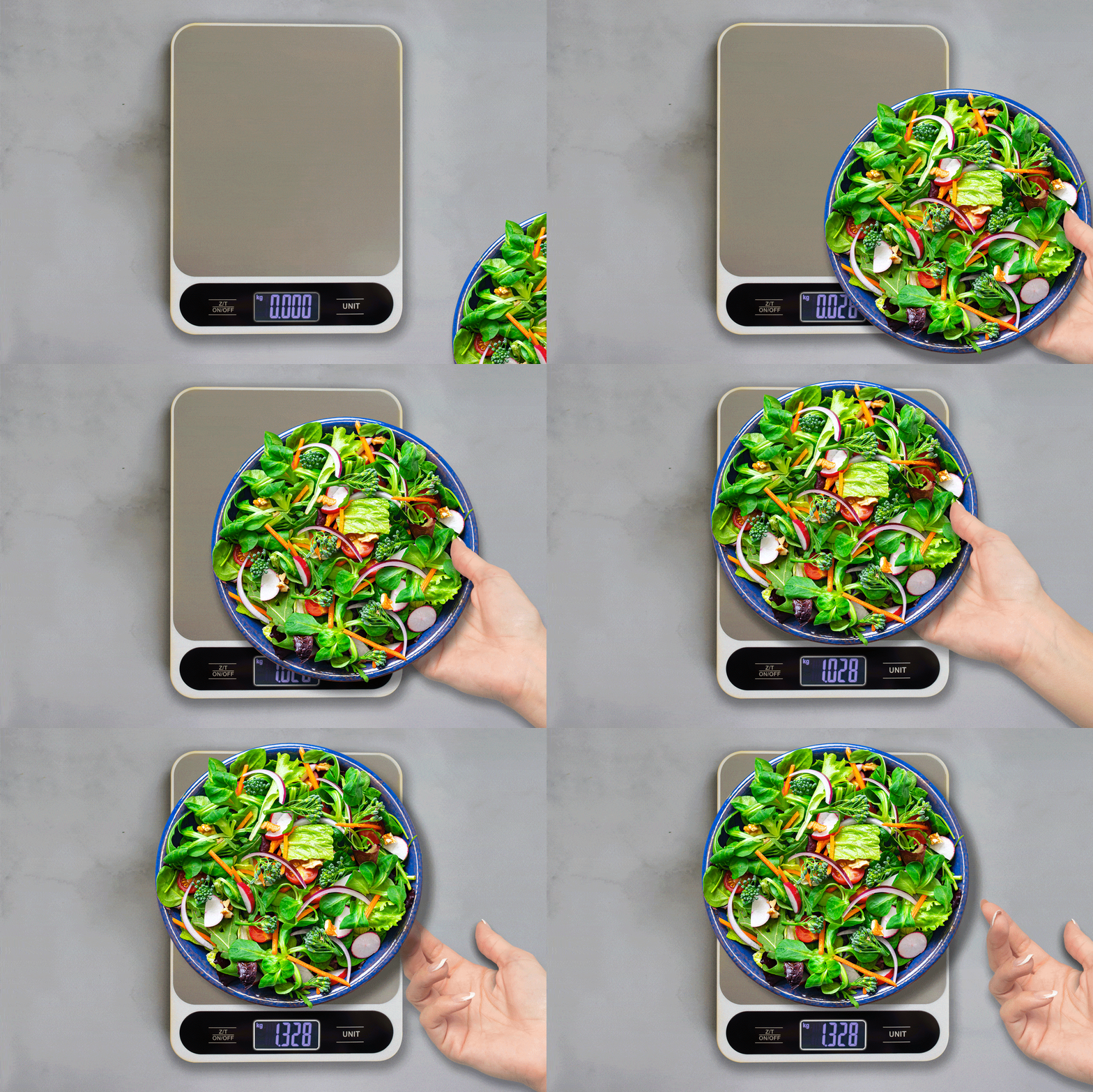
At its core, a digital measuring scale for your kitchen is an electronic device designed to measure the weight of ingredients with exceptional accuracy. Unlike traditional measuring cups and spoons that rely on volume, a digital scale measures mass, providing a far more precise reading. This distinction is crucial, especially for dry ingredients like flour, where how loosely or compactly it’s packed can drastically alter its volume, but its weight remains constant. These scales typically feature an easy-to-read digital display, often backlit, showing measurements in various units, making them incredibly versatile for any recipe you tackle.
The Undeniable Benefits of a Digital Kitchen Scale
Integrating a digital measuring scale into your kitchen routine offers a myriad of advantages that elevate your culinary skills and streamline your food preparation.
Precision Perfected: Baking and Beyond
For bakers, precision isn’t just a preference; it’s a necessity. Baking is often described as a science, where chemical reactions depend on exact ratios of ingredients. A digital kitchen scale ensures that 120 grams of flour is always 120 grams, guaranteeing consistent results from your delicate pastries to your hearty breads. But it’s not just for baking; achieving that perfect sauce consistency or seasoning a dish just right also benefits immensely from accurate measurements.
Smart Portion Control for Healthy Living
Managing your diet and maintaining a healthy lifestyle often involves careful portion control. A digital measuring scale makes it incredibly easy to weigh out specific serving sizes of proteins, carbohydrates, and fats. Whether you’re tracking macros for fitness goals or adhering to a special dietary plan, the precision offered by a digital food scale helps you stay on track without tedious estimation, empowering you to make informed choices about your food intake.
Say Goodbye to Guesswork: Easy Unit Conversion
Have you ever found a fantastic international recipe only to be baffled by unfamiliar units of measurement? Many digital kitchen scales come equipped with a multi-unit conversion function, allowing you to seamlessly switch between grams, ounces, pounds, and even milliliters with the press of a button. This feature eliminates the need for manual conversions or scrambling for charts online, making global recipes accessible and stress-free.
Streamlined Cooking, Less Cleanup
One of the unsung heroes of the digital kitchen scale is its ability to reduce kitchen clutter and cleanup. With the handy tare function, you can place a mixing bowl on the scale, zero it out, add your first ingredient, then zero it again for the next, and so on. This means you can measure multiple ingredients into a single bowl, minimizing the number of measuring cups and dishes you’d otherwise use and ultimately saving you precious time at the sink.
Reduce Waste, Save Money
By providing exact measurements, digital scales help prevent over-measuring, which means less food waste. Whether it’s pasta, rice, or expensive spices, using only the precise amount a recipe calls for ensures you’re not inadvertently throwing away ingredients. Over time, this small efficiency can lead to significant savings on your grocery bill.
Key Features to Look for When Choosing Your Digital Kitchen Scale
With a variety of digital measuring scales on the market, knowing what to prioritize can make all the difference in finding the perfect fit for your kitchen.
Accuracy and Precision: The Golden Rule
The most critical factor is accuracy. Look for scales that offer a high degree of precision, ideally measuring in increments of 1 gram, or even 0.1 grams for tasks requiring extreme exactness, such as weighing yeast or delicate spices for baking. Higher precision means greater reliability in your recipes.
Capacity and Size: Fit for Your Needs
Consider the maximum weight capacity. For most home cooks, a digital kitchen scale with a 3-5 kg (7-11 lb) capacity is perfectly adequate. However, if you frequently prepare large batches, bake for a crowd, or measure bulk ingredients, a scale with a 10 kg (22 lb) capacity might be more suitable. Also, think about its footprint on your counter and how easily it can be stored.
The Magic of the Tare Function
A tare button is non-negotiable. This function allows you to reset the scale to zero after placing a container on it or after adding an ingredient. It’s essential for accurately weighing multiple ingredients in the same bowl and is a hallmark of any good digital measuring scale.
Multi-Unit Conversion: A Global Kitchen Essential
As mentioned earlier, the ability to switch between metric (grams, kilograms, milliliters) and imperial (ounces, pounds, fluid ounces) units is incredibly convenient, especially if you follow recipes from diverse culinary traditions.
Display and Design: Readability Meets Style
An easy-to-read digital display, ideally with a backlight, is crucial. Large numbers and good contrast ensure you can quickly and accurately read measurements, even in a bustling kitchen. Furthermore, consider the materials—stainless steel, tempered glass, or durable plastic are common choices, often impacting ease of cleaning and aesthetic appeal.
Power and Portability
Most digital kitchen scales are battery-operated, offering flexibility in placement. Some rechargeable models or those with AC adapters are also available. Their compact and lightweight design often makes them highly portable, allowing you to take precision on the go, whether to a potluck or even on vacation.
Smart Features for the Modern Cook
For the tech-savvy chef, some advanced digital food scales connect to smartphone apps via Bluetooth. These “smart” scales can track nutritional information, integrate with recipes, and log your measurements over time, providing a comprehensive overview of your culinary habits.
Digital vs. Mechanical Scales: Why Digital Reigns Supreme
While mechanical scales have a nostalgic charm and don’t require batteries, digital kitchen scales overwhelmingly surpass them in modern kitchens.
| Feature | Digital Kitchen Scale | Mechanical Kitchen Scale |
|---|---|---|
| Accuracy | High, often to 0.1g or 1g precision | Lower, less precise, can degrade over time |
| Readability | Clear, easy-to-read digital display (often backlit) | Analog dial, can be prone to parallax error |
| Features | Tare, unit conversion, auto-off, smart connectivity | Basic weight measurement only |
| Power | Batteries or rechargeable | No power needed |
| Design | Slim, compact, modern | Often bulky, vintage aesthetic |
| Durability | Can be more sensitive to drops/moisture | Generally more robust, fewer electronic components |
“As a pastry chef, I can tell you that baking is a science. Just a few grams off in your flour or sugar can completely change the texture and taste of your final product. My digital kitchen scale is my most trusted tool for consistent, professional results every single time,” explains Chef Emily Rodriguez, a renowned pastry artist. Digital scales simply offer a level of precision and functionality that mechanical scales cannot match, making them the superior choice for anyone serious about cooking.
Tips for Using and Maintaining Your Digital Kitchen Scale
To get the most out of your digital measuring scale and ensure its longevity, a few simple practices go a long way.
Setting Up for Success: A Flat Surface is Key
Always place your digital food scale on a hard, flat, and stable surface. Uneven or wobbly counters can lead to inaccurate readings, as the sensors need a consistent base to function correctly. Avoid placing it near vibrating appliances or in direct sunlight, which can also affect performance.
The Art of Taring: Weighing Multiple Ingredients
Mastering the tare function is vital. Place your empty bowl or container on the scale and press the “tare” or “zero” button. This resets the display to zero, so only the weight of the ingredients is measured. Repeat this process for each new ingredient when adding them consecutively into the same bowl, simplifying multi-ingredient recipes.
Cleaning and Care for Longevity
Most digital kitchen scales are not waterproof. To clean, simply wipe the weighing platform and body with a damp cloth, perhaps with a mild soap, and then dry thoroughly. Avoid harsh chemical cleaners or abrasive pads that could damage the surface or electronics. If storing for an extended period, remove the batteries to prevent corrosion.
Calibration: Keeping Your Scale Honest
Over time, any scale can drift slightly in its calibration. While many home digital scales are factory-calibrated, some allow for user calibration. Consult your user manual for specific instructions, often involving a known standard weight. Periodically checking its accuracy can ensure your measurements remain precise.
Troubleshooting Common Digital Kitchen Scale Issues
Even the most reliable digital measuring scale can sometimes act up. Here are quick fixes for common problems:
My Scale Won’t Turn On!
First, check the obvious: are the batteries inserted correctly, and do they have enough charge? If it’s an AC adapter model, ensure it’s securely plugged into both the scale and a working power outlet. A simple battery replacement or checking the power source often resolves this issue.
Inconsistent Readings or Error Messages
If your digital food scale shows inconsistent weights for the same item or displays an “ERR” message, several factors could be at play. Ensure it’s on a flat, stable surface and that nothing is obstructing the sensors underneath. An “ERR” message typically indicates an overload, so remove some weight. Inconsistent readings can also be caused by low batteries, debris on the sensors, or even electromagnetic interference from other kitchen appliances like microwaves. If problems persist after these checks, re-calibration might be necessary, or it could be a sign of a deeper issue requiring manufacturer assistance.
Frequently Asked Questions (FAQ)
Why are digital kitchen scales more accurate than measuring cups?
Digital kitchen scales measure the weight (mass) of ingredients, which is a consistent property. Measuring cups, however, measure volume, and the volume of dry ingredients like flour can vary significantly based on how densely it’s packed, leading to inconsistent results.
Can a digital kitchen scale measure liquids?
Yes, many digital kitchen scales can measure liquids. They typically have a “ml” or “fluid ounce” unit setting. However, for precise liquid measurements by weight, knowing the liquid’s density is important (e.g., 1 ml of water weighs 1 gram). For most home cooking, these settings are sufficient.
How often should I calibrate my digital kitchen scale?
For typical home use, most digital kitchen scales maintain good accuracy without frequent calibration. However, if you notice inconsistent readings or use it very often, calibrating it every 6-12 months, or as per the manufacturer’s instructions, is a good practice.
What capacity do I need for a home kitchen scale?
For the average home cook, a digital measuring scale with a maximum capacity of 3-5 kilograms (approximately 7-11 pounds) is usually sufficient for everyday cooking and baking tasks. If you frequently prepare large meals or bake in bulk, consider a 10 kg capacity.
Are smart kitchen scales worth it?
Smart kitchen scales offer advanced features like nutritional tracking, recipe integration, and data logging through connected apps. They can be particularly worth it for those closely monitoring their diet, body composition, or who appreciate tech-integrated kitchen tools. For basic weighing needs, a standard digital scale is perfectly adequate.
How do I clean my digital kitchen scale?
To clean your digital kitchen scale, simply wipe the surface with a soft, damp cloth, possibly with a mild detergent. Avoid submerging it in water or using harsh chemical cleaners, as these can damage the electronic components. Always ensure it’s dry before storing.
Elevate Your Culinary Journey with a Digital Kitchen Scale
The digital measuring scale for your kitchen is more than just a tool; it’s an investment in the quality and consistency of your cooking. From ensuring flawless baked goods to simplifying healthy portion control and making international recipes a breeze, its benefits are vast and undeniable. By choosing the right model, understanding its features, and practicing proper care, you unlock a new level of culinary confidence. Embrace the precision, minimize the mess, and revolutionize your kitchen experience. It’s time to bring that professional edge home and truly master your craft with the indispensable digital kitchen scale.